
The role of public funding in financing adult learning
Against the backdrop of the European objective to significantly increase adult participation in learning, the conference “Financing adult learning: The role of public funding” addressed the key question of how adult learning in Europe can be financed effectively and sustainably. The aim of the event was to provide an overview of existing funding instruments across EU Member States and to reflect on the future role of public (co-)funding.
The discussions were framed by the growing importance of adult learning for employability, innovation, social fairness, and closing skills and digital gaps. Current European initiatives – such as the planned Union of Skills – further underline the political relevance of lifelong learning. At the same time, it is evident that the ambitious targets of the European Pillar of Social Rights can only be achieved through a corresponding expansion and strategic alignment of funding.
The conference focused on recent Cedefop research on public funding structures for adult learning in Europe. 3s has been involved in several key research projects in this field in recent years and was represented at the conference. Among the presentations were analyses of the overall structures of public (co-)funding, drawing on ReferNet country reports and the Cedefop database on adult learning financing. Further focal points included financial support for individuals – in particular individual learning accounts – as well as instruments to incentivise employer-provided training, such as training funds and recent findings from the CVTS survey.
Günter Hefler, together with Patrycja Lipinska (Cedefop), presented key findings from the study on individual learning accounts and contributed the introductory input to the workshop on “Training leave and income replacement”. On the second day of the conference, Daniel Unterweger presented the potential of training funds, using Lithuania as an illustrative example.
The conference also discussed how public funding can be strategically deployed to mobilise private investment and to design effective cost-sharing arrangements between the state, individuals and employers. It became clear that the focus should be less on individual instruments and more on the interaction of different funding mechanisms – ranging from publicly financed provision of learning opportunities and financial incentives to targeted support for learners and companies.
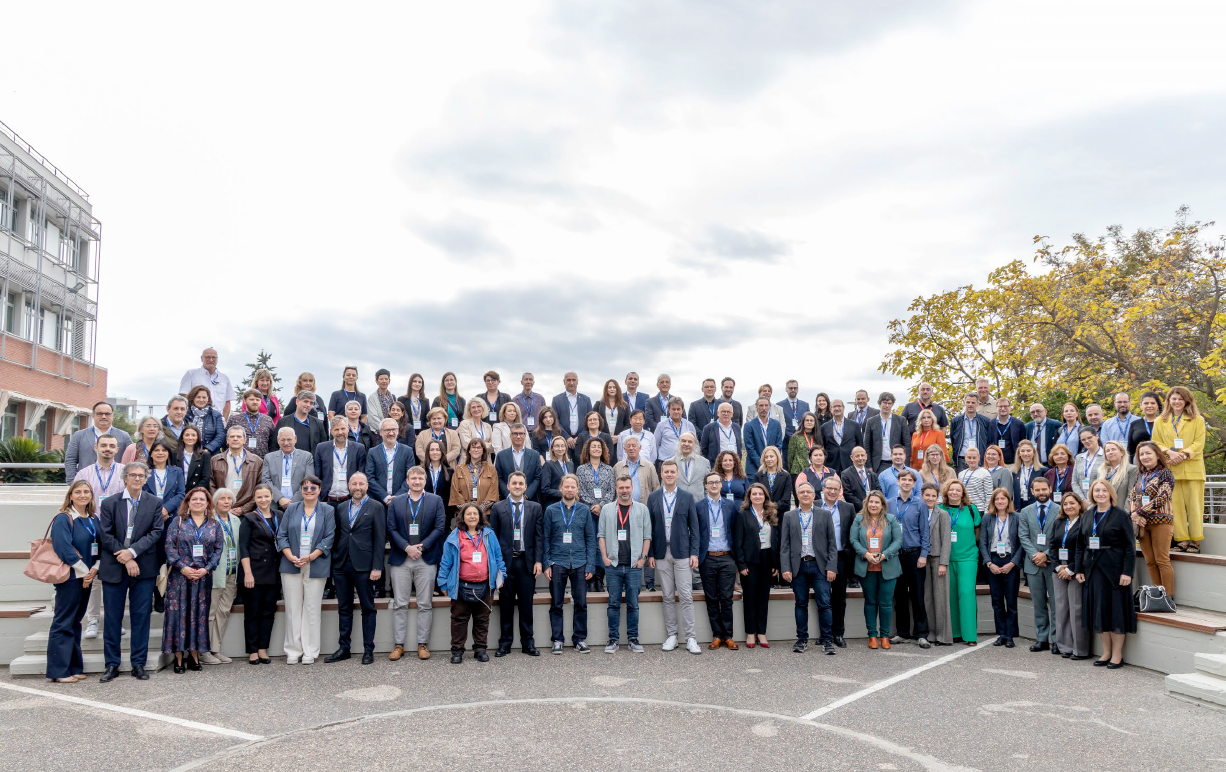
image by Cedefop
Contact: Günter Hefler und Daniel Unterweger
Client: Cedefop