
30 April 2024

Strategic approa­ches to skills development

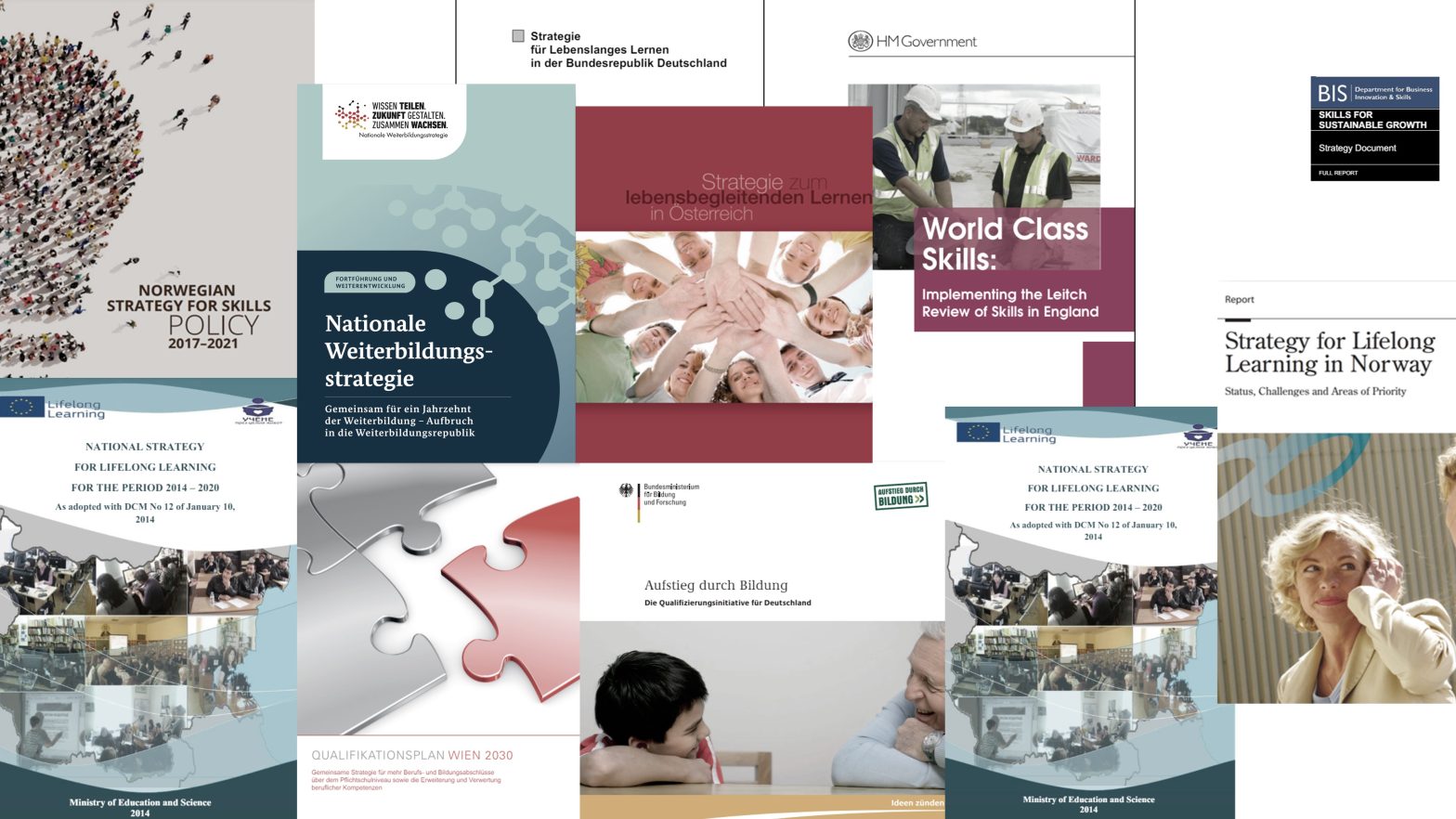
Working Paper No. 2 of Skills2Capabilities has been published recently containing a collection of country case studies on national strategic documents with relation to skills policies.

Education and skills are central for both economic per­for­mance and societal well-being. This insight has been incre­a­sing­ly addressed by policy-makers on national and European level. In order to address these over­ar­ching chal­lenges, an incre­a­sing share of countries have used strategic policy documents in the area of skills policy. However, the overall goals and ori­en­ta­ti­on of different stra­te­gies and their proposed actions can vary sub­stan­ti­al­ly. Policy-making in indu­stria­li­sed economies has long focused on the benefits of acquiring skills for realizing pro­s­pec­ti­ve economic returns via access to well-paid jobs, but the importance of skills for a wider range of social and human/personal deve­lo­p­ment aspects has in part also been taken up by policy-making.

The tensions between such different ori­en­ta­ti­ons and approa­ches will be analysed as part of Work Package 2 of the Skills2Capabilities project under the lead of 3s. In a first deli­vera­ble of Work Package 2, we provide a review of the lite­ra­tu­re, present our ana­ly­ti­cal framework for analysing skills stra­te­gies as well as our empirical approach, and present our analysis of strategic policy documents on skills at the hand of six country case studies, capturing the strategic document’s main foci, their com­pre­hen­si­ve­ness and the extent of their implementation.

The Working Paper can be down­loa­ded here.

Link to the Skill2Capabilities project website.

Contact: Daniel Unterweger

Client: Horizon Europe

30 Jun

Dual voca­tio­nal education and training in the D‑A-CH region

A new report by 3s, ibw, BIBB and OBS EHB shows how differently dual vocational education and training is developing in Germany, Austria and Switzerland.

30 Jun

Learning outcomes in work-based voca­tio­nal education and training

A new Cedefop report examines how learning-outcomes-based curricula are implemented in work-based IVET across 10 EU Member States.

1 Jun

Review of the Vienna Labour Film Festival 2026

The Vienna Labour Film Festival has once again demonstrated how topical, diverse and socially relevant the subject of work can be when explored through cinema.

1 Jun

Quality assurance for more inclusive VET in Slovenia

A recent Peer Review explored how quality assurance can help strengthen inclusive upper secondary vocational education and training in Slovenia.

30 Jun

Dual voca­tio­nal education and training in the D‑A-CH region

A new report by 3s, ibw, BIBB and OBS EHB shows how differently dual vocational education and training is developing in Germany, Austria and Switzerland.

30 Jun

Learning outcomes in work-based voca­tio­nal education and training

A new Cedefop report examines how learning-outcomes-based curricula are implemented in work-based IVET across 10 EU Member States.

1 Jun

Review of the Vienna Labour Film Festival 2026

The Vienna Labour Film Festival has once again demonstrated how topical, diverse and socially relevant the subject of work can be when explored through cinema.

30 Jun

Dual voca­tio­nal education and training in the D‑A-CH region

A new report by 3s, ibw, BIBB and OBS EHB shows how differently dual vocational education and training is developing in Germany, Austria and Switzerland.

30 Jun

Learning outcomes in work-based voca­tio­nal education and training

A new Cedefop report examines how learning-outcomes-based curricula are implemented in work-based IVET across 10 EU Member States.

30 Jun

Dual voca­tio­nal education and training in the D‑A-CH region

A new report by 3s, ibw, BIBB and OBS EHB shows how differently dual vocational education and training is developing in Germany, Austria and Switzerland.

30 Jun

Learning outcomes in work-based voca­tio­nal education and training

A new Cedefop report examines how learning-outcomes-based curricula are implemented in work-based IVET across 10 EU Member States.

>all news