
On the islands of the Serenissima — Horizon partner meeting
Project partners of the Skills2Capabilities research project, coordinated by 3s convened in Venice last week. The meeting aimed to discuss the progress achieved in all work packages and evaluate the (preliminary) results of the project so far. The project focuses on addressing the disparity between qualification supply and demand in European labour markets by examining how qualification systems can be improved.
The second physical project meeting of Skills2Capabilities opened with a keynote speech by 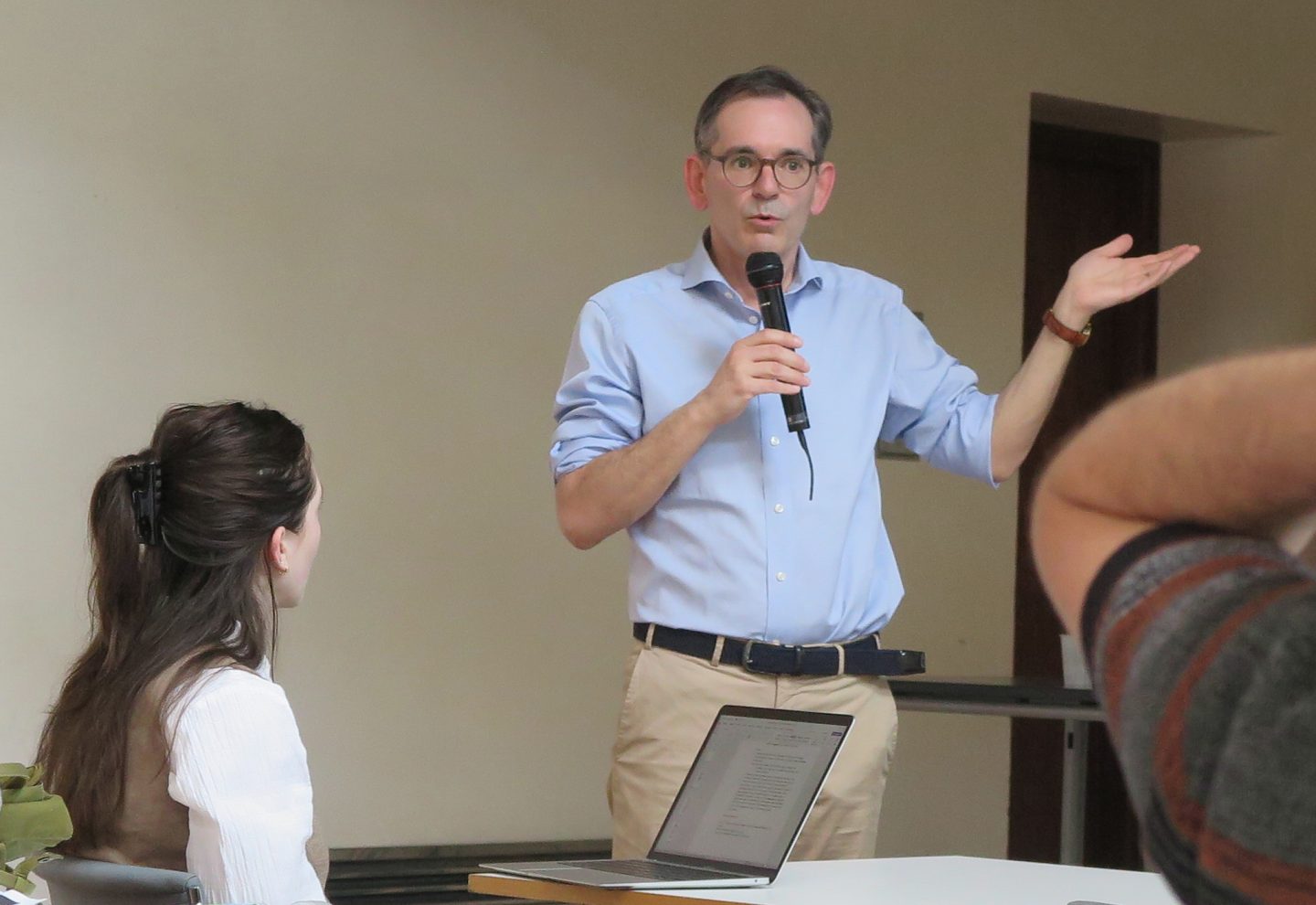 Sandra McNally (University of Surrey and The London School of Economics and Political Science (LSE)), on ‘Training and Re-Skilling in the Labour Market’. Around 40 people, including consortium members from Austria, Bulgaria, Estonia, Germany, Italy, the Netherlands, Norway and the UK, advisory board members and international researchers, followed the keynote and attended the discussion which served as a joint reflection on the keynote’s input.
Following the morning session’s keynote, discussions centred on analysing skills policy strategies and their instruments as well es the responsiveness of VET systems based on the development of curricula in selected occupations in the participating countries. The afternoon session delved into the role of career orientation and lifelong guidance and discussed funding mechanisms for VET and adult learning, emphasizing the need to consider equality of access, the impact of funding structures on training volumes, and delineating funding changes from policy shifts.
 Simultaneously to the afternoon session a public event organized by our Italian partner (University of Padova) in collaboration with the Regional School Office for Veneto was held, focusing on counselling and orientation activities in Italian lower secondary schools.
The second day of the meeting started with a keynote speech by Giulia Santangelo (Cedefop) on the two waves of the ‘Cedefop European skills and jobs survey’ on the skill requirements, skill mismatches and initial and continuing learning of adult workers in EU labour markets. The consortium members used the opportunity to raise in-depth questions regarding this interesting data source.
The sessions following the keynote focused on understanding regional structural changes and analysing job advertisement data to comprehend shifts in skill demands, with discussions highlighting indicators for regional analysis and the impact of labour market dynamics on skill requirements. As well as drivers and effects of skills mismatch were examined through the capability approach, exploring factors contributing to mismatches and considering subjective measures alongside job tenure, gender differences, and retrospective perspectives to understand skill alignment and the opportunity aspect of vocational choices.
We extend our gratitude to all participants for engaging in this lively event, especially the University of Padova for their hospitality, and look forward to further nurturing the exchange of ideas on labour shortages and skill mismatches within the Skills2Capabilities project.

image by Eva Steinheimer
Contact: Jörg Markowitsch
Client: Horizon Europe